
Traveling With a Vibrator: Carry-On vs Checked Bags, Batteries, Security and Discreet Packing
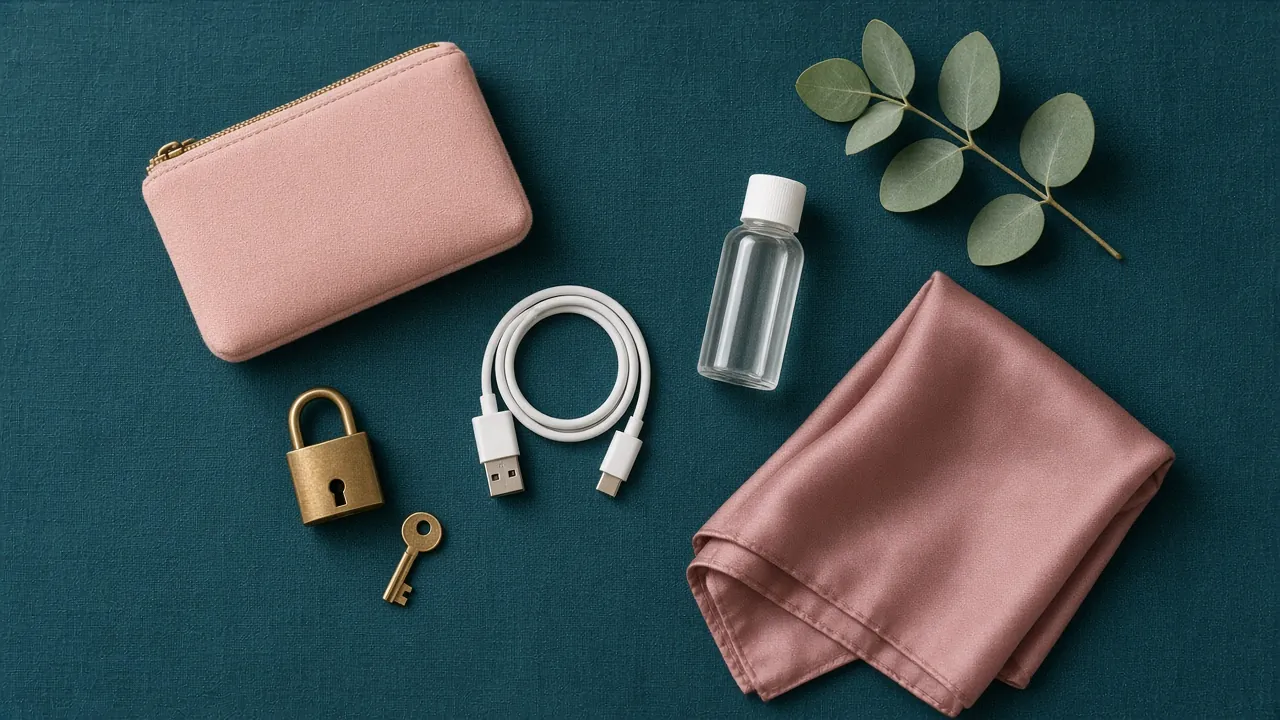
Educational content for adults. It isn’t medical, legal or travel advice. This article links to Vibe Picks, our curated product recommendations page, and contains two affiliate links. If you buy through them, VibeSequence may earn a commission at no extra cost to you. See our affiliate disclosure.
Bringing a vibrator on a trip is generally allowed on U.S. flights, and it’s usually much less dramatic than it can feel while you’re packing. The practical questions are the same ones you’d ask about any small rechargeable gadget: which bag it goes in, what to do about the battery, how to stop it switching on, and what to expect if security wants a closer look.
This guide answers those questions using the official guidance we could check: the U.S. Transportation Security Administration (TSA), the Federal Aviation Administration (FAA) PackSafe battery rules, and the UK government’s hand luggage pages. Rules change, and airlines and airports can be stricter than the national baseline, so treat this as a starting point and check your airline and the current official pages before you fly.
The short answer
- Is it allowed? TSA’s “What Can I Bring?” list includes adult toys with a “Yes” for both cabin and hold baggage. The TSA officer still makes the final decision at the checkpoint.
- Which bag? For a rechargeable toy, the cabin bag is usually the simpler choice. The FAA allows lithium-battery devices in checked bags only if they’re completely powered off and protected from accidental activation, and it advises keeping lithium-ion batteries with you in the cabin.
- Batteries: spare lithium batteries and power banks must travel in your carry-on, never in checked bags. TSA says the limits cover nearly all lithium batteries in everyday personal electronics.
- Stop it buzzing: use the travel lock if your toy has one, or switch it fully off and pack it so the button can’t be pressed.
- Charge it first. Officers may want to see a device turn on, and one with a flat battery may not be allowed on board.
- Lube counts as a liquid in your carry-on, so pack a travel-size bottle.
Can you take a vibrator on a plane?
Generally, yes. TSA lists “Toys (Adult)” in its “What Can I Bring?” tool with a “Yes” for carry-on bags and a “Yes” for checked bags, and points to the FAA rules for portable electronic devices (TSA, checked 2 November 2026). Like every entry on that list, it carries TSA’s standard note that the final decision rests with the officer at the checkpoint.
TSA’s rules cover screening at U.S. airports. In the UK, the government’s hand luggage pages don’t list sex toys by name. They do list common electronic devices, such as phones, tablets and electric shavers, as allowed in hand and hold luggage, and they warn that security staff can refuse any item they judge dangerous, even one that’s usually permitted (GOV.UK, checked 2 November 2026). For other countries, check the airport and airline you’re flying with, because the rules can differ depending on where you’re traveling to or from.
Carry-on vs checked bags
For most battery-powered toys, both bags are possible. The choice comes down to battery safety, privacy and convenience.
| Question | Carry-on (cabin bag) | Checked (hold) bag |
|---|---|---|
| Is an adult toy allowed? (TSA) | Yes | Yes |
| Toy with a built-in lithium battery (FAA) | Yes, within the battery limits | Only if fully off and protected from being switched on by accident |
| Spare lithium batteries and power banks (FAA, TSA) | Yes, protected from damage and short circuit | No |
| Lube and other liquids (TSA) | Travel size: 3.4 oz (100 ml) or less per container, in a quart-sized bag | Larger bottles go here |
| If security wants to inspect it | It happens in front of you | It may be opened without you there; TSA leaves a notice of inspection inside |
Why many travelers choose the carry-on. The FAA explains that every lithium-ion battery can overheat and go into “thermal runaway”, and that flight crews are trained to deal with battery fires in the cabin. That’s why it recommends carrying lithium-ion batteries in the cabin rather than in checked bags (FAA PackSafe, checked 2 November 2026). Keeping the toy with you also means any inspection happens with you present, and it can’t be lost with a delayed suitcase.
If you’d rather check it. That’s allowed for a toy whose battery is within the limits, as long as it’s completely powered off and protected from switching on. A travel lock, a case that keeps the buttons from being pressed, and a toy that’s clean and dry all help. Remove any loose spare batteries and carry those in the cabin.
Lithium battery rules, in plain English
Most modern vibrators have a rechargeable lithium battery built in. The FAA’s battery rules for airline passengers say:
- rechargeable lithium batteries up to 100 watt-hours (Wh) are allowed on passenger aircraft; batteries of 101 to 160 Wh need the airline’s approval, and anything above 160 Wh is forbidden;
- a device with a lithium battery may go in a checked bag only when it’s switched fully off and can’t be turned on by accident;
- spare lithium batteries, a category that includes power banks and portable chargers, belong in the cabin and can’t go in checked bags;
- damaged or recalled batteries and devices mustn’t be carried in either bag unless the battery has been removed or made safe;
- many airlines have stricter limits, especially on power banks, so check with your airline before you travel (FAA PackSafe, checked 2 November 2026).
TSA’s own battery entry adds that these limits “allow for nearly all types of lithium batteries used by the average person in their electronic devices” (TSA, checked 2 November 2026).
How to work out your toy’s watt-hours
Toy makers usually list battery capacity in milliamp-hours (mAh) rather than watt-hours. The FAA’s method is to divide the mAh by 1,000 and multiply by the voltage. Using the figures SVAKOM publishes for its two wands (rated voltage 3.7 V for both):
- Mini Emma Neo: 600 mAh ÷ 1,000 × 3.7 V = about 2.2 Wh;
- Emma Neo 2: 2600 mAh ÷ 1,000 × 3.7 V = about 9.6 Wh.
Those are our calculations from the maker’s figures, and both are a small fraction of the 100 Wh limit. If your toy’s manual doesn’t give a voltage or capacity, contact the maker before you travel rather than guessing.
Toys with removable batteries
Some toys run on standard AA or AAA batteries. The FAA treats ordinary dry alkaline batteries as allowed in both carry-on and checked bags as long as they’re protected from damage and short circuit. Taking them out of the toy for the journey is an easy way to make sure it can’t switch on. Keep spares in their original packaging or a small case so the ends can’t touch metal.
Travel locks: what they do and how to use them
A travel lock is a setting that stops a toy turning on when a button is pressed by accident, for example when it’s squeezed in a bag. Makers often list it as a feature. SVAKOM, for instance, describes the travel lock on its Mini Emma Neo and Emma Neo 2 wands as a way to stop the toy switching itself on by accident while you’re traveling or storing it (SVAKOM product pages, checked 2 November 2026).
Some practical points:
- Learn it at home. The way you lock and unlock a toy differs from maker to maker, so check your manual before you pack and practise once or twice. Keep a photo of the relevant manual page on your phone.
- Be ready to unlock it. TSA notes that officers can ask you to switch an electronic device on, and that a device without power won’t be allowed on the plane. The UK guidance says the same about devices that don’t switch on when requested. If your toy is locked, you may need to unlock it to show it works.
- No travel lock? Switch it fully off, check it stays off, and pack it in a firm case or between soft items so nothing presses the button. Taking out removable batteries does the same job.
- App-connected toys: if a partner can control your toy remotely, make sure it’s switched off and disconnected before you travel, so it can’t be started from a distance.
What happens at security screening
For most travelers, nothing much happens. Bags go through the X-ray, and a vibrator looks like what it is: a small electronic device. Here’s what the official guidance says can happen.
At the checkpoint (carry-on)
- Electronics: TSA asks travelers in standard lanes to take electronic devices larger than a cell phone, like laptops and tablets, out of their bag for separate screening. It says smaller personal-care gadgets, like a hair dryer, a shaver or an electric toothbrush, aren’t part of that rule. Listen to the officer, because instructions can vary.
- A closer look: TSA says that even a permitted item may need additional screening if it triggers an alarm or raises other security concerns. If an officer needs to look in your bag, you can stay calm and matter-of-fact: it’s a personal massager, it’s switched off, and you can show that it powers on if asked.
- Cluttered bags slow things down. TSA recommends keeping bags organized, because a jam-packed bag takes longer to clear. Packing the toy in its own pouch near the top of your bag makes any inspection quicker and more private.
In the hold (checked bags)
TSA says most checked bags are screened without a physical search. If your bag is opened, TSA places a notice of baggage inspection inside it. If you use a luggage lock, TSA has master keys for certain branded locks that say they can be opened by TSA officers, but it can still remove a lock if it needs to inspect the bag (TSA, checked 2 November 2026). If something is damaged during screening, TSA has a claims process; if it happens in transit, it’s a matter for your airline.
How to pack a vibrator discreetly
Discreet packing is mostly about keeping the toy clean, switched off and easy to identify without fuss. These are practical suggestions rather than rules:
- Use a pouch. A fabric storage bag, a washable zip bag or the toy’s own case keeps it clean, separates it from other things and makes it easy to lift out in one go if an officer asks.
- Clean and dry it first. Pack it clean and completely dry, and keep it away from anything that could stain or scratch it.
- Keep it near the top. If your bag is searched, a pouch near the top can be checked without unpacking everything.
- Bring what you need to charge it. Pack its charging cable, which is easy to forget, especially if it uses a magnetic or custom connector.
- Separate the lube. A travel-size bottle goes in your liquids bag in your carry-on; larger bottles go in a checked bag.
- Size matters. A smaller toy is simply easier to pack. Our guide to full-size vs mini wands compares the trade-offs.
Lube and liquids
Lubricant counts as a liquid or gel at security. Under TSA’s liquids rule, carry-on liquids, gels and creams have to be in travel-size containers of 3.4 ounces (100 ml) or less, packed together in a quart-sized bag; anything larger goes in checked baggage (TSA, checked 2 November 2026). The UK government also restricts liquids in hand luggage, notes that the rules have changed at some UK airports and advises checking with your airport before you travel (GOV.UK, checked 2 November 2026). Rules can differ for transit passengers outside the UK too.
Not sure which lube to pack? Our guide to water-based vs silicone lube explains which type suits which toy materials.
Cleaning on the road
You don’t need a special kit to keep a toy clean while traveling. A review of best-practice recommendations notes that, while the evidence is limited, soap and water may be enough for toys made of non-porous materials: silicone, glass, stainless steel and hard plastic. It suggests taking care with crevices and around buttons, battery compartments and motors, and air drying to avoid towel lint (Rullo et al., 2018).
- Check that your toy is waterproof before you rinse it. If it isn’t, wipe it with a damp, soapy cloth and keep water away from the charging port.
- Let it air dry on a clean towel or tissue before you pack it again. Packing it damp in a sealed bag isn’t a good idea.
- Remember that cleaning is different from disinfection and sterilization. Cleaning removes visible dirt, usually with water and detergent. Disinfection kills many or all disease-causing microorganisms except bacterial spores. Sterilization destroys all microbial life, and is done with professional equipment such as steam under pressure (CDC). Travel care is about cleaning. If you’d normally disinfect, follow your toy maker’s instructions and the product label.
For the full routine, material by material, see our guide on how to clean a vibrator. If you’re not sure what your toy is made of, our guide to body-safe sex toy materials explains what to look for.
Charging on the road
- Charge before you leave. A charged toy can be switched on if security asks, and you won’t need to charge it on the first night.
- Use the right cable. Many rechargeable toys now charge over USB-C. SVAKOM, for example, lists USB-C charging for both Emma Neo wands. Others use magnetic or custom cables that are hard to replace while traveling.
- Check the plug and voltage. If you charge from a wall adapter abroad, use a plug adapter that fits, and check that your charger supports the local voltage. A USB port on your laptop or a power bank can avoid the question.
- Charge it dry and in sight. The FAA lists damage, overheating, exposure to water and overcharging among the factors that can cause thermal runaway. Make sure the toy and its port are dry, don’t charge it if it’s damaged, swollen or unusually hot, and unplug it once it’s full.
- On a plane: the FAA asks passengers to tell the flight crew immediately if a battery or device is overheating, expanding, smoking or burning.
International trips and customs
This is the area where we can’t give you a single answer, and it’s worth being careful. Airport security rules, customs rules and local laws are separate things, and they differ from country to country.
- Security rules vary. The UK government notes that the rules for electronic items differ depending on which country you’re traveling to or from, and that other countries can have different liquid rules for transit passengers.
- Customs rules are set by your destination. TSA points travelers entering the United States to U.S. Customs and Border Protection for what they can bring in. For anywhere else, check the official government or customs website of the country you’re visiting, and of any country you’re connecting through if you’ll pass through its customs.
- Personal use is the usual framing. The FAA’s battery allowances are for personal use, and the UK guidance says different rules apply to goods you’re taking abroad to sell. A toy for your own use, packed with your own things, is a different situation from carrying new, boxed products for other people.
- When in doubt, ask or leave it at home. If you’re unsure about a particular country, the safest options are to check its official guidance, contact its embassy or consulate, or choose not to bring the toy.
We’re not giving legal advice here, and we haven’t made claims about any specific country’s laws. Check the current official sources for your own trip.
Before-you-fly checklist
- Check your airline’s rules on batteries and power banks, and your departure airport’s liquid rules.
- Charge the toy fully and pack its charging cable.
- Learn how to lock and unlock it, then lock it, or take out removable batteries.
- Clean it, let it dry completely and put it in a pouch.
- Pack it in your carry-on near the top, or, if checking it, make sure it’s completely off and can’t be switched on.
- Put spare batteries and power banks in your carry-on only.
- Pack lube in a travel-size bottle in your liquids bag.
- For international trips, check your destination’s official customs guidance.
Travel-friendly options on Vibe Picks
If you’re choosing a toy partly for travel, the features to look for are a compact size, a travel lock, a built-in rechargeable battery with an easy-to-replace cable, and a waterproof rating so it’s simple to rinse. Our vibe quiz can help you narrow down a style, and our complete vibrator guide covers the types in more depth.
Two wands on our Vibe Picks page illustrate the size trade-off. We haven’t tested these toys or verified the specifications independently; the figures below come from SVAKOM, except the watt-hour figures, which are our own calculation from SVAKOM’s capacity and voltage.
| Specification | Mini Emma Neo | Emma Neo 2 |
|---|---|---|
| Size and weight | 170 × 40 × 40 mm, 130 g | 290 × 60 × 60 mm, 365 g |
| Battery | 600 mAh, 3.7 V; about 2.2 Wh | 2600 mAh, 3.7 V; about 9.6 Wh |
| Charging | USB-C, 1.5-hour charge | USB-C, 3-hour charge |
| Travel lock | Yes | Yes |
| Water rating | IPX7; can go under water to 1 m | IPX7; can go under water to 1 m |
SVAKOM Mini Emma Neo is described by SVAKOM as a compact, lightweight wand in a travel-friendly design. See Mini Emma Neo at SVAKOM → · Mini Emma Neo on Vibe Picks
SVAKOM Emma Neo 2 is the full-size option, with a larger head and a heating function listed by SVAKOM. It takes up more room in a bag. See Emma Neo 2 at SVAKOM → · Emma Neo 2 on Vibe Picks
For a dual-stimulation toy, our guide to rabbit vibrators covers the options; check each toy’s listed size, travel lock and charging method with the same checklist.
FAQ
Can I bring a vibrator in my carry-on?
Yes, in the U.S. TSA lists adult toys as allowed in carry-on bags, and for a rechargeable toy the cabin is where the FAA recommends lithium-ion batteries travel. The officer at the checkpoint makes the final decision, and other countries’ airports set their own rules.
Can I put a vibrator in my checked luggage?
Yes, TSA allows it. If it has a lithium battery, the FAA requires it to be switched fully off and protected from being turned on by accident, and any spare lithium batteries or power banks must go in your carry-on instead.
Will security open my bag because of a vibrator?
Usually not. According to TSA, most checked luggage never needs a hand search, but any bag can get a closer look, and a permitted item that triggers an alarm can lead to additional screening. If that happens, a clean toy in its own pouch makes it quick and low-key.
Do I have to tell security I’m carrying a vibrator?
The guidance we checked doesn’t ask you to declare it. If an officer asks about it, a short, factual answer is enough, and you should be ready to show that it switches on.
Should I drain the battery before flying?
The official guidance we checked doesn’t ask for that. It asks for devices in checked bags to be fully powered off and protected from switching on, and both TSA and the UK government warn that a device that won’t power up when asked may not be allowed on board. Charging before you go is the more practical choice.
Can I take a vibrator abroad?
Many travelers do, but customs rules and local laws differ between countries, and we can’t give a general yes. Check the official customs guidance for your destination and any transit country before you pack.
Related guides
- The Complete Vibrator Guide
- Wand Vibrators: Full-Size vs Mini, How to Use One and How to Choose
- Rabbit Vibrators: How They Work, How to Use One and How to Choose
- How to Clean a Vibrator: Everyday Care, Materials & After an Infection
- Body-Safe Sex Toys: Which Materials to Choose (and Which to Skip)
- Water-Based vs. Silicone Lube: Which Is Best for Your Vibrator (and Your Body)?
This article is for general education. It isn’t legal or medical advice, and travel rules change. Always check your airline, your airports and the current official guidance before you travel.
Sources
We checked the official pages below on 2 November 2026. Rules and pages may have changed since.
- Transportation Security Administration. What Can I Bring? Toys (Adult) (page last updated 21 July 2026); Lithium batteries with 100 watt hours or less in a device; What Can I Bring? (all items).
- Transportation Security Administration. Liquids, Aerosols, and Gels Rule; Security Screening (carry-on and checked baggage screening, inspection notices and locks).
- Federal Aviation Administration. PackSafe: Airline Passengers and Batteries (page last updated 2 October 2026). Reference to TSA or FAA doesn’t imply endorsement of VibeSequence or of any product by either agency or the U.S. Government.
- GOV.UK. Hand luggage restrictions at UK airports: Overview and Electronic devices and electrical items. Contains public sector information licensed under the Open Government Licence v3.0.
- Rullo JE, Lorenz T, Ziegelmann MJ, Meihofer L, Herbenick D, Faubion SS. Genital vibration for sexual function and enhancement: best practice recommendations for choosing and safely using a vibrator. Sex Relation Ther. 2018;33(3):275–285. doi:10.1080/14681994.2017.1419558. PMC
- Rutala WA, Weber DJ, Healthcare Infection Control Practices Advisory Committee. Guideline for Disinfection and Sterilization in Healthcare Facilities, 2008. Centers for Disease Control and Prevention. Introduction, Methods, Definition of Terms. Available free of charge on the CDC website. Reference to CDC doesn’t imply endorsement of VibeSequence or of any product by CDC, HHS or the U.S. Government.
- SVAKOM. Mini Emma Neo and Emma Neo 2 product pages and specifications (manufacturer information, checked 2 November 2026).